Quick summary: Kawung is an ancient batik motif in the shape of four flower petals or slices of sugar palm fruit intersecting symmetrically, known since the Mataram era and understood as a symbol of purity, long life, and justice.
Among the hundreds of batik motifs, kawung is one of the easiest to recognize and also one of the oldest. Its form is simple: oval circles arranged in groups of four around a single central point, repeated neatly across the cloth. It is precisely this simplicity that makes kawung timeless; it was worn in palace circles centuries ago and still appears today on shirts, dresses, and even official uniforms. This article explores the shape of kawung, its traces in history, the meanings commonly associated with it, its variations, and how to wear it in modern dress.
1. Getting to Know the Shape of the Kawung Motif
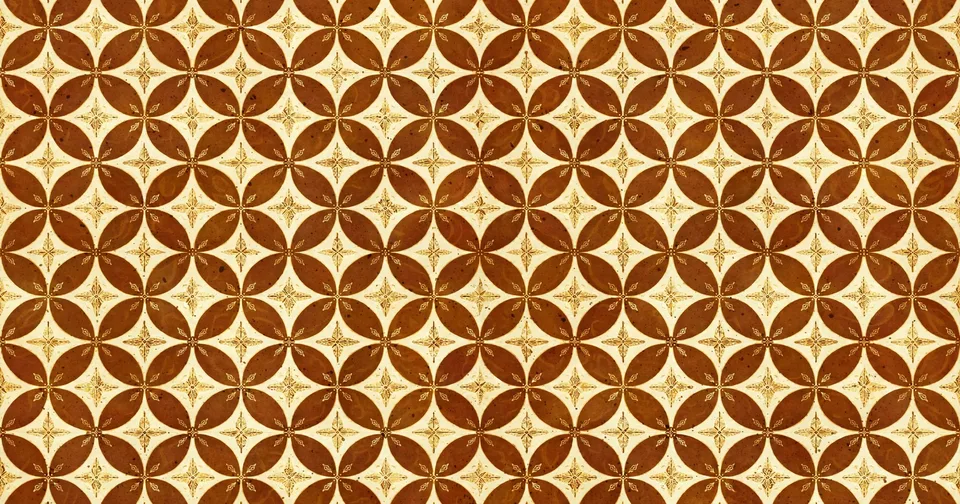
The defining feature of kawung is four ellipses or petals whose tips meet and intersect at a single central point, resembling a flower with four petals in bloom when viewed from above. This basic pattern is repeated regularly across the entire surface of the cloth, creating a calm, symmetrical geometric rhythm. The shape is also often associated with slices of the sugar palm fruit, or kolang-kaling, cut open, because the word kawung in Javanese refers to the sugar palm tree. A single kawung unit can be small and tightly packed, or large and widely spaced, depending on the variation and the artisan. It is precisely from the simplicity of this basic form that kawung stays recognizable even though it appears in many guises. The consistent repetition of its pattern makes a length of kawung cloth look unified and orderly from a distance.
2. Kawung's Trail from the Mataram Era to Temple Reliefs
Kawung is widely known as a motif that developed during the Mataram Sultanate era and became a signature motif of the palace circles in Java. Similar four-petal forms are also found in the relief ornaments of a number of far older temples in Java, so many believe the basic pattern had been known to the Javanese people long before it became popular as a batik motif. In the palace circles of Yogyakarta and Surakarta, kawung was used on the cloth and dress of the court, including ceremonial attire. From the palace, the motif then spread and became known to the wider public as batik developed in regions such as Solo, where Kampoeng Batik Laweyan remains one of its batik centers to this day.
3. The Meaning Behind the Kawung Motif
In the common knowledge passed down through generations, kawung is understood as a symbol of purity and a clean heart, in line with the image of the lotus flower and the sugar palm fruit that gives benefit from its roots to its fruit. The four petals pointing to the four directions are also often associated with a long life, a life that is useful to others, as well as justice and wise authority for its wearer. Because of these meanings, kawung was long closely associated with the dress of kings and palace officials. Today, these meanings keep kawung a popular choice for formal events and work attire: its orderly appearance conveys dignity without being excessive. You can compare explanations of other classic motifs in the article on Solo batik motifs and their meanings.
4. Once a Motif of Palace Circles
In the past, a number of motifs including kawung belonged to the forbidden motifs, that is, motifs whose use was restricted to certain members of the royal family and palace circles. This restriction meant kawung was not casually worn by the general public and added to the motif's exclusive and sacred aura. As times changed and the palaces opened themselves to outside influences, those rules gradually loosened. Batik developed beyond the palace walls, was traded, and was made by artisans in batik villages such as Laweyan. Now anyone may wear kawung, from students to officials, although its formal impression still lingers. The journey of batik from the palace environment to worldwide recognition can be traced further in the article on the history of batik from the palace to UNESCO.
5. Kawung Variations: Picis, Beton, and Others
From the same basic pattern, artisans have developed many kawung variations. Kawung picis is a small, tightly packed variation, its name linked to picis, a small coin from the past. Conversely, kawung beton is large in size, resembling the jackfruit — called beton in Javanese — with wider spacing between units. There are also variations that add isen, or filling, inside the petals, variations with more elongated petals, and kawung combined with other motifs such as ceplok. Kawung's colors vary too: from the brown sogan typical of Solo and classic indigo, to the bright colors of coastal and modern batik. Each variation gives a different impression even though it springs from the same form. There is also kawung drawn with fine hand-drawn batik (tulis) technique for special garments, and combination kawung paired with other motifs, for example truntum, on a single length of cloth.
6. Wearing Kawung Today
Kawung is highly versatile for present-day dress. For formal needs, a medium-sized kawung shirt in sogan or dark colors gives a neat, dignified impression. For a lighter look, choose small kawung picis on a blouse or dress. The size of the motif should be adjusted to your posture: large motifs suit long cloth and loose garments, while small motifs are safer for various body shapes. Because the kawung pattern is already orderly and quite prominent, pair it with plain bottoms or accessories so they do not clash. For more relaxed occasions, brightly colored kawung on a short-sleeved shirt gives a fresh impression without losing its classic character. At Batik Isma in Kampoeng Batik Laweyan, Solo, handmade stamped batik (cap) and hand-drawn batik (tulis) are available in a variety of classic motifs including geometric patterns like this; the collection and its photos can be asked about via WhatsApp.
Discover Authentic Laweyan Batik at Batik Isma
The discussion above truly comes to life when you can see and feel the cloth in person. Batik Isma is located at Jl. Nitik No. 5, Kampoeng Batik Laweyan, Solo, in the heart of a neighborhood that has lived from the batik tradition for generations. Batik Isma makes hand-drawn batik (tulis), stamped batik (cap), and natural-dye batik, accepts batik uniform orders, and runs batik-making classes for anyone who wants to try it firsthand.
Batik Isma accepts batik uniform orders for offices, schools, communities, and families, with a choice of stamped (cap), hand-drawn (tulis), or natural-dye batik. Discuss your motif, fabric, quantity, and estimated production time directly via WhatsApp.
Whether you are looking for batik to wear yourself, to give as a gift, or to wear together with family and team, feel free to ask. Tell us what you need — the event you will attend, the colors you like, or the type of batik you are after — so we can suggest the most fitting options. Collection availability and other details can change at any time, so please ask us directly for the latest information.
Want to deepen your knowledge of batik? Read also our articles on Solo batik motifs and their meanings and the history of batik from the palace to UNESCO. The better you know batik, the easier it is to choose a cloth that truly suits you and carries meaning.
Questions about the Batik Isma collection? Chat with Batik Isma on WhatsApp or visit the Catalog and Contact pages.
Frequently Asked Questions (FAQ)
What is the basic shape of the kawung motif?
Its basic form is four petals or ellipses intersecting at a single central point, resembling a blooming flower or slices of sugar palm fruit, and this pattern is repeated regularly across the surface of the cloth.
Is kawung among the oldest batik motifs?
Yes, kawung is known as one of the oldest batik motifs. It developed in the Mataram era, and similar four-petal patterns are found on the reliefs of old temples in Java.
What does the kawung motif mean?
In general, kawung is understood as a symbol of purity and a clean heart, long life, a beneficial life, as well as justice and wise leadership.
What is the difference between kawung picis and kawung beton?
Kawung picis is small in size and tightly arranged, while kawung beton is large, resembling a jackfruit, with wider spacing between its units.
Can the general public wear kawung now?
Yes. Kawung was once a forbidden motif restricted to palace circles, but now anyone can wear it for work attire, formal events, or everyday wear.
Ask via WhatsApp