Quick summary: Get to know the natural ingredients used to dye batik, the colours they produce, and the benefits and care of naturally dyed batik.
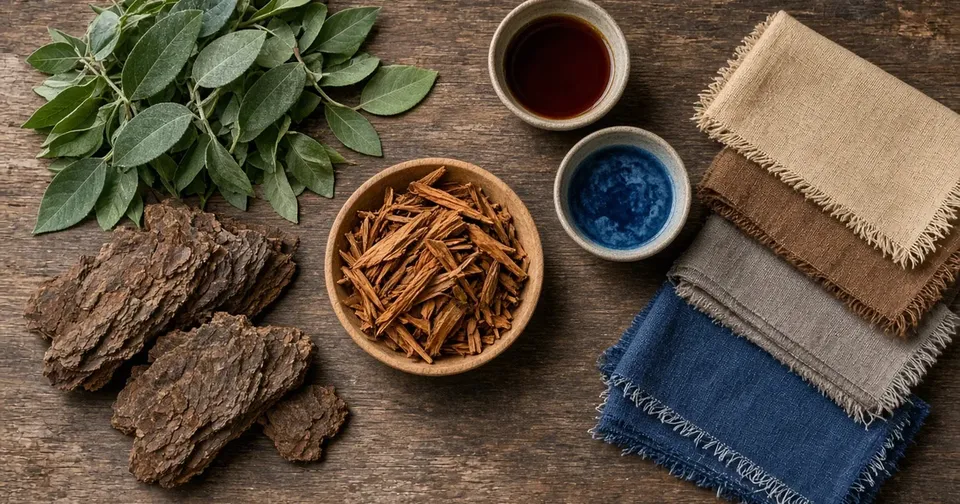
Before synthetic dyes became widespread, batik artisans in Java relied on nature for colour. Leaves, bark, roots, and fruit were processed into dyes that produced soft, warm hues. Today, natural batik dyes are in demand again for their distinctive beauty and because they are kinder to the environment. Let us get to know the natural dye materials most commonly used.
Why Natural Dyes Are in Demand Again
There are several reasons naturally dyed batik is increasingly sought after:
- Distinctive colours. Natural dyes produce colours that are deep, soft, and never garish.
- Kinder to the environment. Their waste tends to break down more easily than chemical dyes, although it still needs to be managed.
- A story behind every colour. Each colour has an ingredient and a process that is interesting to tell.
- Uniqueness. The resulting colour can differ slightly from one production run to the next, so every cloth feels unique.
Indigo: The Source of Blue
Indigo is obtained from the leaves of the Indigofera tinctoria plant, locally known as tom. The leaves are soaked and fermented until they produce a blue paste. The cloth is dipped repeatedly; the more often it is dipped, the deeper the blue, from light blue to a dark blue approaching black. Indigo is one of the oldest natural dyes in the world and is widely used in classic batik.
Tingi: Brownish Red
Tingi comes from the bark of the tingi tree (Ceriops tagal), a plant that grows in mangrove areas. Its bark produces a reddish-brown colour and is often mixed with other ingredients to form the sogan colour.
Jambal: Reddish Brown
Jambal is taken from the bark of the jambal tree, or Peltophorum tree. Its colour is a reddish brown, and together with tingi and tegeran it forms the main ingredients of the sogan colour characteristic of Solo and Yogyakarta batik.
Tegeran: Yellow
Tegeran comes from the wood of the tegeran tree (Cudrania javanensis). The wood is cut into small pieces and boiled until it yields a yellow colour. Mixed with tingi and jambal, tegeran helps create a golden-brown hue.
Other Natural Dye Materials
Besides the four ingredients above, artisans also make use of:
- Mahogany bark for reddish brown.
- Mango leaves for yellowish green.
- Mangosteen rind for brownish purple.
- Turmeric for bright yellow, although it is less durable.
- Sappanwood (secang) for pink to red.
- Tegeran and jackfruit bark for brownish yellow.
The Natural Dyeing Process
In broad outline, natural dyeing consists of:
- Extraction: the material is boiled or fermented until its colour essence comes out.
- Mordanting: the cloth is treated with a binding agent (a mordant) so the colour adheres better.
- Repeated dipping: the cloth is dipped, drained, dried, and dipped again many times over.
- Fixation: the colour is locked in with substances such as alum, lime, or tunjung (an iron-based solution). The type of fixative influences the final colour.
The process takes far longer than with synthetic dyes, and that is what makes naturally dyed batik so valuable.
Advantages and Limitations
Advantages: soft, natural colours, a classic feel, a strong production story, and a more environmentally friendly approach.
Limitations: a more limited choice of colours, results that can vary between batches, longer production time, and the need for more careful care to keep the colours lasting.
Caring for Naturally Dyed Batik
- Wash by hand using lerak (soapnut) or a gentle soap.
- Use cold water and do not soak for long.
- Dry in the shade, away from direct sunlight.
- Keep perfume and chemicals from coming into contact with the cloth.
- Store in a dry place with good air circulation.
Discover Authentic Laweyan Batik at Batik Isma
The discussion above truly comes to life when you can see and feel the cloth in person. Batik Isma is located at Jl. Nitik No. 5, Kampoeng Batik Laweyan, Solo, in the heart of a neighborhood that has lived from the batik tradition for generations. Batik Isma makes hand-drawn batik (tulis), stamped batik (cap), and natural-dye batik, accepts batik uniform orders, and runs batik-making classes for anyone who wants to try it firsthand.
Batik Isma accepts batik uniform orders for offices, schools, communities, and families, with a choice of stamped (cap), hand-drawn (tulis), or natural-dye batik. Discuss your motif, fabric, quantity, and estimated production time directly via WhatsApp.
Whether you are looking for batik to wear yourself, to give as a gift, or to wear together with family and team, feel free to ask. Tell us what you need — the event you will attend, the colors you like, or the type of batik you are after — so we can suggest the most fitting options. Collection availability and other details can change at any time, so please ask us directly for the latest information.
Questions about the Batik Isma collection? Chat with Batik Isma on WhatsApp or visit the Catalog and Contact pages.
Frequently Asked Questions (FAQ)
What natural dyes are used for batik?
Commonly used ones include indigo, tingi, jambal, tegeran, mahogany, sappanwood, and mango leaves.
Where does the sogan colour come from?
The sogan colour generally comes from a mixture of tingi, jambal, and tegeran.
Does naturally dyed batik fade easily?
With a good fixation process and proper care, natural colours can last a long time. Avoid harsh detergents and direct sunlight.
Are natural dyes more environmentally friendly?
Generally yes, because the raw materials come from plants, but the waste still has to be treated properly.
Ask via WhatsApp