
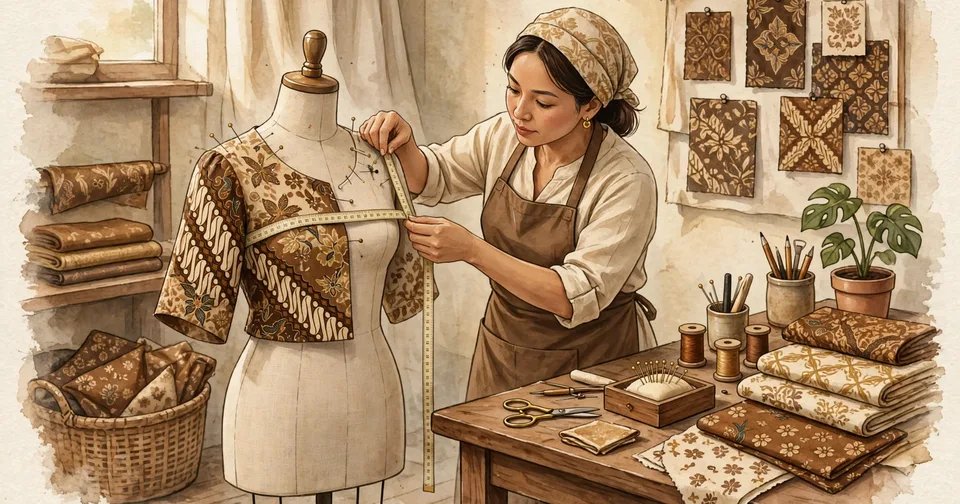
Quick summary: The way to choose the right women's batik size is to measure your bust, waist, hips, and garment length from the most comfortable clothes you own, then match them against the seller's size chart. Each maker's chart can differ, so always confirm your size with the seller before buying.
A blouse that is too tight across the bust, a tunic that is too long, or a dress that is tight at the hips are the most common complaints when buying women's batik, especially online. Yet avoiding them is not difficult: just take five minutes to measure your body correctly. This guide explains how to measure the four key measurements, presents a general guide table from S to XXL, and distinguishes the sizing needs of blouses, tunics, and dresses. The same method applies to men's clothing, as discussed in our article on men's batik shirt sizing.
1. Prepare Your Tools and a Reference Garment
You only need a flexible sewing tape measure and one reference garment that is most comfortable to wear, such as a favorite blouse or dress. There are two ways to measure: directly on the body, or on the reference garment laid flat on a table. The second way is easier and more accurate for online shopping, because the numbers directly reflect the finished garment's size. When measuring a reference garment, multiply the measured bust width and hip width by two to get the full circumference. Record all numbers in centimeters so they are easy to match against the seller's chart.
2. How to Measure Your Bust, Waist, and Hips
The bust is measured around the fullest part of the chest, passing under the armpits, with the tape kept level with the floor and not pulled tight. The waist is measured at its narrowest point, usually slightly above the navel. The hips are measured around the widest part of the hips and buttocks. While measuring, stand straight and breathe normally; do not hold your breath or pull in your stomach, because the result will be smaller than your actual size and the garment risks being too tight. Add two to four centimeters of ease to your body measurements for comfortable room to move.
3. How to Measure Garment Length and Sleeve Length
Garment length is measured from the highest point of the shoulder near the neck, straight down to the desired hem. For a blouse, the hem is generally around the upper hips; for a tunic, to mid-thigh; for a dress, it can reach the knee, calf, or ankle depending on the style. The safest way is to measure a reference garment from the shoulder tip to its hem. Sleeve length is measured from the shoulder tip to the wrist for long sleeves, or to above the elbow for short and three-quarter sleeves. These two measurements are often forgotten, yet they determine whether a tunic looks proportional or instead swamps the body.
4. A General Guide Table for Women's Sizes
The following table is a general guide to women's clothing sizes in centimeters, commonly used by many clothing makers in Indonesia. These numbers are only a starting point for estimating your size:
| Size | Bust | Waist | Hips |
|---|---|---|---|
| S | 84–88 | 66–70 | 90–94 |
| M | 88–92 | 70–74 | 94–98 |
| L | 92–96 | 74–78 | 98–102 |
| XL | 96–100 | 78–84 | 102–108 |
| XXL | 100–106 | 84–90 | 108–114 |
Important to remember: each maker's chart can differ, sometimes by two to four centimeters for the same label. So do not rely on the letters S, M, or L alone; always match your measurements against the seller's official size chart, and confirm by message before buying if you are still unsure.
5. Different Size Needs for Blouses, Tunics, and Dresses
Blouses generally have a more fitted cut, so bust and shoulder width are the main deciding factors; make sure there is still room when you raise your arms. Tunics have a looser, longer cut, so pay attention to garment length and hip circumference so the lower part is not tight when sitting. Dresses combine both: bust, waist, and hips all matter, especially on A-line dresses or those with a defined waistline. For dresses without a waistline and with a straight cut, hip circumference is usually the measurement that most determines comfort. One more thing worth checking is shoulder width, especially if you have broad shoulders: collared blouses and dresses will feel far more comfortable when the shoulder width fits, without pulling at the back as you move.
6. Common Mistakes When Choosing a Size
- Relying only on the size letter without looking at the centimeter figures in the seller's chart.
- Measuring the body too tightly or while holding your breath, so the result is smaller than reality.
- Forgetting to account for cotton fabric shrinkage after the first wash.
- Ignoring garment length, even though height greatly affects how a tunic and dress fall.
- Choosing a smaller size in the hope the body will shrink, leaving the garment uncomfortable from the first wear.
7. Tips for Buying Women's Batik Online
Keep a note of your measurements on your phone so it is always ready when you shop. Before paying, send your desired bust measurement and garment length to the seller and ask for a size recommendation; experienced sellers usually know the character of their products' cuts by heart. If your size falls between two sizes, choose the larger one for fitted cuts and the smaller one only for loose cuts. Batik Isma at Jl. Nitik No. 5, Kampoeng Batik Laweyan, Solo answers sizing questions via WhatsApp before purchase, and an overview of its collection can be seen on the Catalog page.
Discover Authentic Laweyan Batik at Batik Isma
The discussion above truly comes to life when you can see and feel the cloth in person. Batik Isma is located at Jl. Nitik No. 5, Kampoeng Batik Laweyan, Solo, in the heart of a neighborhood that has lived from the batik tradition for generations. Batik Isma makes hand-drawn batik (tulis), stamped batik (cap), and natural-dye batik, accepts batik uniform orders, and runs batik-making classes for anyone who wants to try it firsthand.
Batik Isma accepts batik uniform orders for offices, schools, communities, and families, with a choice of stamped (cap), hand-drawn (tulis), or natural-dye batik. Discuss your motif, fabric, quantity, and estimated production time directly via WhatsApp.
Whether you are looking for batik to wear yourself, to give as a gift, or to wear together with family and team, feel free to ask. Tell us what you need — the event you will attend, the colors you like, or the type of batik you are after — so we can suggest the most fitting options. Collection availability and other details can change at any time, so please ask us directly for the latest information.
Want to deepen your knowledge of batik? Read also our articles on men's batik shirt sizing. The better you know batik, the easier it is to choose a cloth that truly suits you and carries meaning.
Questions about the Batik Isma collection? Chat with Batik Isma on WhatsApp or visit the Catalog and Contact pages.
Frequently Asked Questions (FAQ)
How do I know my batik blouse size?
Measure the bust and garment length from the most comfortable blouse you own, then match the numbers against the seller's size chart. Do not rely on the letters S, M, or L alone.
Are all makers' size charts the same?
No. Each maker can differ by several centimeters for the same label, so always check the seller's official chart and confirm by message before buying.
Which size should I choose if I am between two sizes?
For fitted cuts such as blouses and dresses with a waistline, choose the larger size. For loose cuts such as tunics, the smaller size is still safe to choose.
Does batik fabric shrink after washing?
Cotton fabric can shrink slightly on the first wash. If your size is borderline, it is safer to choose one size larger or ask the seller about the fabric's character.
How do I measure the right tunic length?
Measure from the highest shoulder point down to mid-thigh on your reference garment. This is the length that makes a tunic look proportional and modest when worn.
Ask via WhatsApp