
Quick summary: Batik is an Indonesian cultural heritage recognised by UNESCO as Intangible Cultural Heritage since 2009. Yet when shopping, many buyers are still confused: what is the difference between hand-drawn batik (batik tulis), stamped batik (batik cap), and batik-motif cloth made by printing? Why can their prices differ so much? And how do you care for them so they last for years?
This article summarises practical tips you can use before buying, and after the batik is in your hands.
What Is Batik, Really?
Traditionally, batik is cloth whose motif is created using a colour-resist technique with malam (batik wax). The wax is applied to the cloth, then the cloth is dipped in dye. The parts covered by wax do not absorb the colour. After that, the wax is removed (a step called lorod, using hot water), and the process can be repeated for the next colour.
From this definition, there are two main techniques that qualify as batik: hand-drawn batik and stamped batik. Printed cloth, meanwhile, is actually a batik-motif textile, because it does not go through the wax-resist process.
1. Hand-Drawn Batik (Batik Tulis)
Hand-drawn batik is made with a canting, a small tool with a copper spout used to apply molten wax by hand, line by line. The process can take weeks to months, depending on the complexity of the motif and the number of colours.
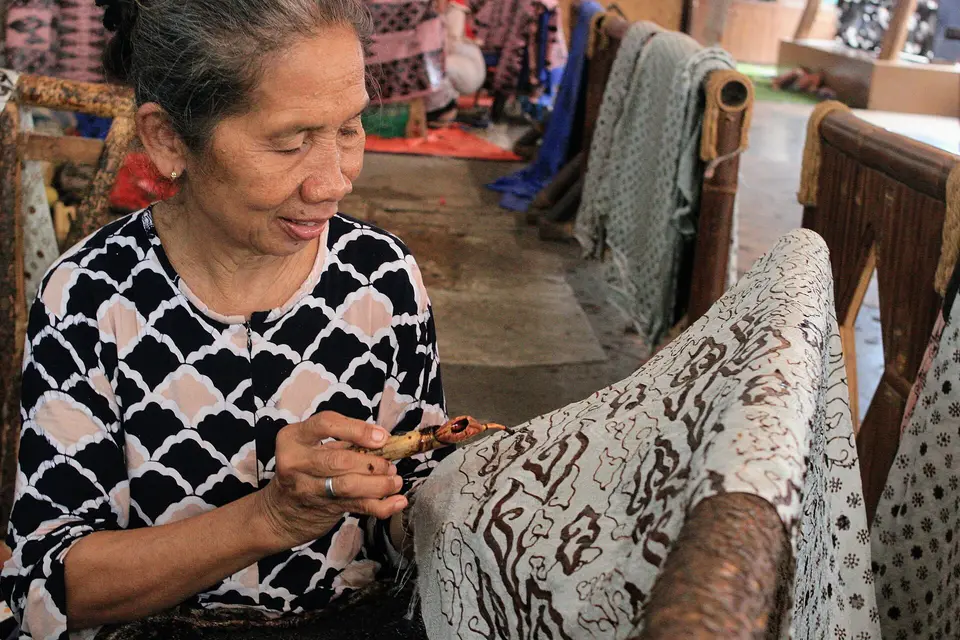
Characteristics of hand-drawn batik:
- The motifs are never truly identical. Repeated motifs always differ slightly because they are made by hand.
- Fine, varied lines. Line thickness can vary, and there are sometimes small, natural droplets of wax.
- The colour penetrates to the back. The front and back of the cloth look almost equally clear, because the wax is applied on both sides.
- The scent of wax can sometimes still be faintly detected on new cloth.
2. Stamped Batik (Batik Cap)
Stamped batik is made using a copper stamp, called a cap, which is dipped into hot wax and then pressed onto the cloth. This technique developed to speed up production, so its price is generally more affordable than hand-drawn batik, but it is still genuine batik because it uses wax.
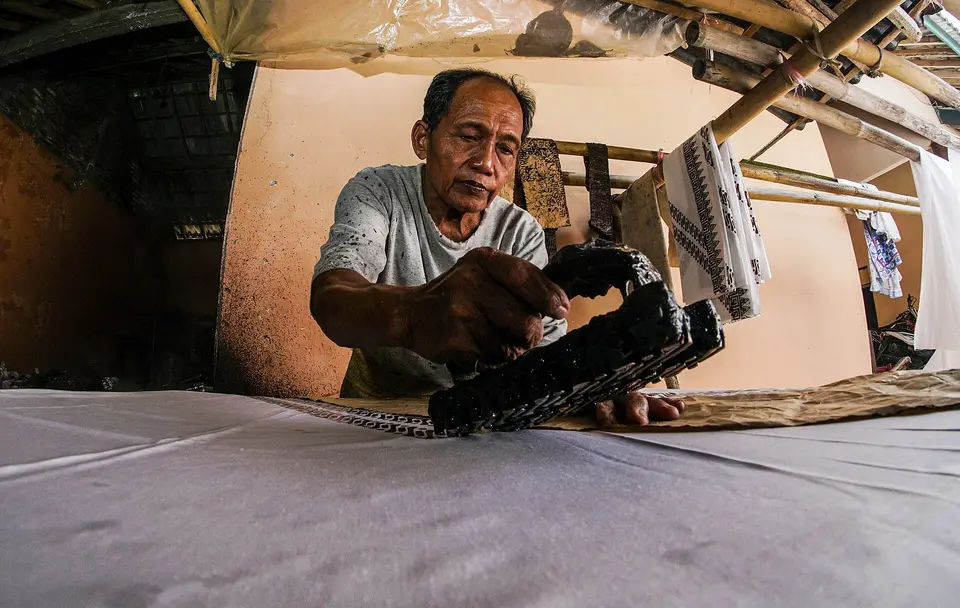
Characteristics of stamped batik:
- Motifs repeat in a regular pattern. The size and shape of the motifs tend to be uniform.
- There are joins between stamps. Look at where the patterns meet; they sometimes overlap slightly or shift a little.
- Lines are thicker and more consistent than those of hand-drawn batik.
- The colour also penetrates to the back, although sometimes not as evenly as in hand-drawn batik.
Many artisans also make combination batik, a blend of stamping and hand-drawing in a single cloth — for example, the base pattern is stamped and the details are then drawn in with a canting.
3. Printed Cloth (with Batik Motifs)
Printed cloth is made with a textile printing machine or screen printing. Its motifs imitate batik, but the process uses no wax. Production is fast and mass-scale, so it is the cheapest of the three.
Characteristics of printed cloth:
- The colour is strong on one side only. The back of the cloth is usually pale or white.
- The motifs are very neat and precise, with no variation at all.
- There is no scent of wax.
- The colour feels as if it "sits" on the surface, rather than soaking into the fibres of the cloth.
Quick Tips for Checking When You Buy
- Turn the cloth over. This is the easiest method. The colour of hand-drawn and stamped batik penetrates through; printing does not.
- Observe the repetition of the motifs. Perfectly identical? It is likely stamped or printed. Slight variations? It is likely hand-drawn.
- Feel the surface. Printed cloth sometimes feels slightly stiff on the patterned parts because of the ink on the surface.
- Ask the seller directly. A good batik seller will openly explain how their products are made.
How to Care for Batik So It Lasts
Hand-drawn and stamped batik, especially those using natural dyes (see also how to tell hand-drawn batik apart above), need gentler care than ordinary clothing.
Washing
- Wash by hand, not in a washing machine, especially for hand-drawn batik.
- Use a mild soap or baby shampoo. Traditionally, many people use lerak, a natural soap that is gentle on batik.
- Avoid harsh detergents and bleach, as they can make the colours fade quickly.
- Do not scrub or wring too hard. Simply immerse and press gently.
- For the first wash, wash separately, as there may still be a little loose dye.
Drying
- Dry in the shade, not directly under the scorching sun.
- Turn the cloth inside out so the inner side faces outward while drying.
- Do not leave it out too long once it is dry.
Ironing
- Iron from the back of the cloth at a medium temperature.
- You can also place a thin cloth over the batik so the motif does not become shiny.
- Do not spray fragrance or perfume directly onto batik cloth.
Storing
- Store it in a dry wardrobe that is not damp.
- Hang it or fold it loosely, and change the fold positions from time to time so they do not leave marks.
- Use natural fragrances such as vetiver root or peppercorns wrapped in cloth, rather than mothballs placed directly against the fabric.
Which One Should You Choose?
There is no wrong choice; it all comes back to your needs:
- Hand-drawn batik suits a collection, a special gift, or an important occasion, because every piece is unique.
- Stamped batik is right for regular wear such as going to the office or family events, while still honouring genuine batik technique.
- Printed cloth is practical for mass uniform needs on a limited budget.
Most importantly, by understanding the differences, you can buy wisely and care for your beloved batik so that it lasts a long time.
Discover Authentic Laweyan Batik at Batik Isma
The discussion above truly comes to life when you can see and feel the cloth in person. Batik Isma is located at Jl. Nitik No. 5, Kampoeng Batik Laweyan, Solo, in the heart of a neighborhood that has lived from the batik tradition for generations. Batik Isma makes hand-drawn batik (tulis), stamped batik (cap), and natural-dye batik, accepts batik uniform orders, and runs batik-making classes for anyone who wants to try it firsthand.
Batik Isma accepts batik uniform orders for offices, schools, communities, and families, with a choice of stamped (cap), hand-drawn (tulis), or natural-dye batik. Discuss your motif, fabric, quantity, and estimated production time directly via WhatsApp.
Whether you are looking for batik to wear yourself, to give as a gift, or to wear together with family and team, feel free to ask. Tell us what you need — the event you will attend, the colors you like, or the type of batik you are after — so we can suggest the most fitting options. Collection availability and other details can change at any time, so please ask us directly for the latest information.
Questions about the Batik Isma collection? Chat with Batik Isma on WhatsApp or visit the Catalog and Contact pages.
Ask via WhatsApp