
Quick summary: High walls, narrow alleys, and houses blending Javanese and European styles. A look at the architecture of the merchant homes in Laweyan, Solo.
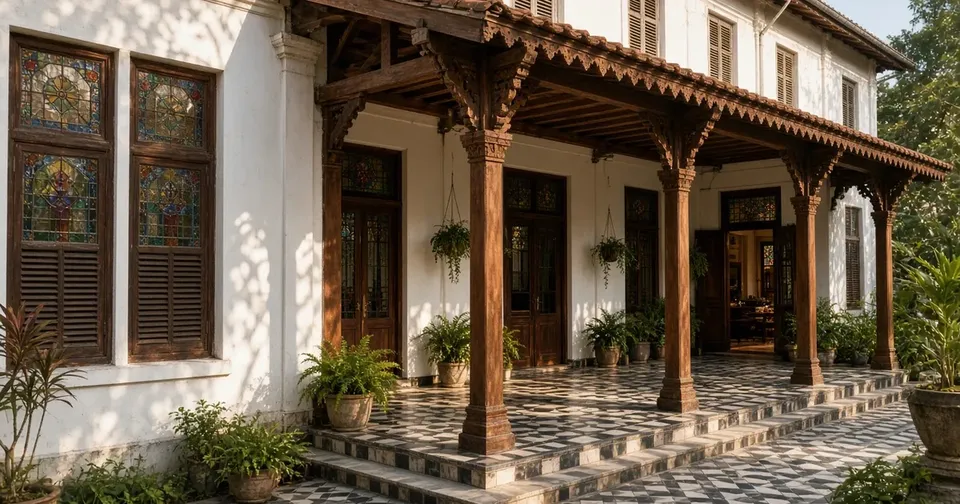
One of the greatest charms of Kampoeng Batik Laweyan is not only its batik, but also the houses of its batik merchants. High walls, winding narrow alleys, grand wooden gates, and buildings that blend Javanese and European styles make Laweyan feel like an open-air museum. This architecture tells a story of prosperity, privacy, and the way of life of the batik entrepreneurs of the past.
High Walls That Shape the Alleys
The most striking feature of Laweyan is the high walls surrounding the merchants' houses. They can reach several metres in height. Between these walls, narrow alleys form to become the kampung's lanes.
There are several interpretations of why the walls were built so high:
- Security. A merchant's house stored wealth, raw materials, and valuable cloth.
- Privacy. Family life and trade secrets, including dye recipes, were shielded from outside eyes.
- A symbol of status. A sturdy wall reflected its owner's prosperity.
- Independence. Laweyan's merchants were known for being self-reliant and inclined to keep their distance from outside influence.
The Layout of a Merchant House
A Laweyan merchant house was generally not just a residence, but also a place of business. Its layout roughly consists of:
- Regol, or gate: a large wooden entrance gate, sometimes roofed.
- Front courtyard: an open space before the main building.
- Pendapa: an open structure for receiving guests and holding events.
- Dalem, or main house: the family's living quarters and bedrooms.
- Gandok: a side building for family or other purposes.
- Production area at the back: where batik was made, dyed, and hung out to dry.
- Warehouse: a place to store raw materials and finished cloth.
With a layout like this, the entire batik business chain took place within a single compound.
A Blend of Javanese, European, and Chinese Styles
In their heyday, Laweyan's merchants dealt extensively with traders of many different backgrounds. This influence is reflected in the architecture:
- Javanese elements: the pendapa, teakwood structures, and a traditional division of rooms.
- European (Indies) elements: tall pillars, large windows, stained glass, patterned tiles, and colonial-style façades.
- Chinese elements: certain ornaments on doors and decorations.
Colourful patterned tiles and stained glass in the windows are details much admired by visitors.
Bunkers and Secret Passages
Some merchant houses in Laweyan are said to have underground rooms or hidden passages. These spaces were supposedly used to store valuables and to take shelter during unsafe times. The existence of such spaces adds to the kampung's aura of mystery, although not every house has one and not all of them are open to the public.
From Merchant Homes to Public Spaces
As the batik industry faded in the mid-20th century, some merchant houses fell into neglect. Since the area was designated as Kampoeng Batik Laweyan on 25 September 2004, many houses have been restored and given new functions as showrooms, galleries, guesthouses, cafés, or places to learn batik. These efforts help keep the historic buildings alive.
Tips for Enjoying Laweyan's Architecture
- Explore on foot so you can enjoy the details of the walls, gates, and alleys.
- Come in the morning or late afternoon for the best light when taking photographs.
- Pay attention to small details such as the tiles, door handles, and wood carvings.
- Respect the homeowners. Many buildings are still lived in, so do not enter without permission.
- Choose houses that are open to the public, such as showrooms or houses that function as galleries.
What the Architecture Means for Laweyan Batik
The architecture of the merchant houses is proof that batik was once a major industry that sustained the lives of Laweyan's people. When you buy batik from this kampung, you are not only taking home a piece of cloth, but also a part of the long history depicted on its old walls.
Discover Authentic Laweyan Batik at Batik Isma
The discussion above truly comes to life when you can see and feel the cloth in person. Batik Isma is located at Jl. Nitik No. 5, Kampoeng Batik Laweyan, Solo, in the heart of a neighborhood that has lived from the batik tradition for generations. Batik Isma makes hand-drawn batik (tulis), stamped batik (cap), and natural-dye batik, accepts batik uniform orders, and runs batik-making classes for anyone who wants to try it firsthand.
Batik Isma accepts batik uniform orders for offices, schools, communities, and families, with a choice of stamped (cap), hand-drawn (tulis), or natural-dye batik. Discuss your motif, fabric, quantity, and estimated production time directly via WhatsApp.
Whether you are looking for batik to wear yourself, to give as a gift, or to wear together with family and team, feel free to ask. Tell us what you need — the event you will attend, the colors you like, or the type of batik you are after — so we can suggest the most fitting options. Collection availability and other details can change at any time, so please ask us directly for the latest information.
Questions about the Batik Isma collection? Chat with Batik Isma on WhatsApp or visit the Catalog and Contact pages.
Frequently Asked Questions (FAQ)
Why are houses in Laweyan surrounded by high walls?
For security, privacy, as a symbol of status, and to protect batik trade secrets.
What architectural styles can be found in Laweyan?
A blend of Javanese, European (Indies), and a touch of Chinese influence.
Can the merchant houses be visited?
Some have been converted into showrooms, galleries, or guesthouses. Houses that are still lived in should not be entered without permission.
Is it true that there are secret passages?
Some houses are said to have underground rooms, but not all of them, and not all are open to the public.
Ask via WhatsApp